The Importance of Taking Therapy During and After the IVF Process

In Vitro Fertilization (IVF) is often described as a medical miracle, a process that brings science and hope together to help people realize their dream of parenthood. But while many prepare for the physical and financial aspects, few prepare for the emotional and psychological journey that accompanies it.
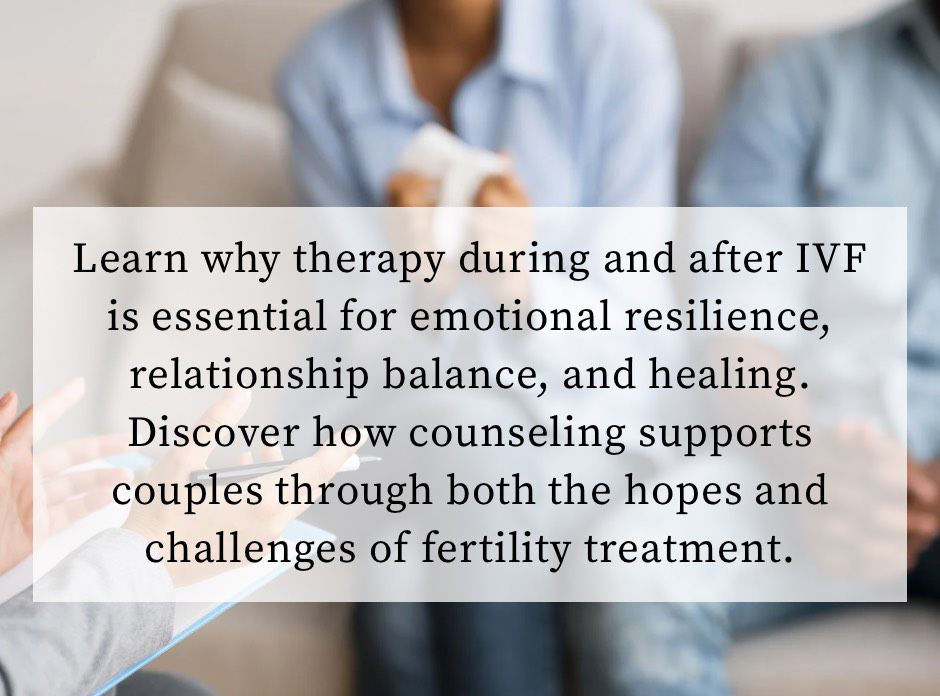
IVF is not just about fertility treatment; it’s a deeply human experience filled with anticipation, fear, and vulnerability, and that’s why therapy can be such a powerful companion.
The Emotional Rollercoaster of IVF
The IVF process often brings fluctuating emotions: hope, anxiety, excitement, disappointment, guilt, and grief.
Each phase, from hormone injections to embryo transfers and the long two-week wait can strain even the strongest minds. Some common emotional challenges include:
Anxiety about outcomes or repeated failures
Feelings of guilt or inadequacy linked to infertility
Emotional and physical exhaustion
Relationship strain
Isolation or loss of confidence
Acknowledging these emotions and addressing them early through therapy helps restore balance and resilience.
Why Therapy Matters During IVF
Therapy during the IVF process provides a safe and neutral space to process feelings, reduce stress, and gain clarity.
A therapist can help you:
Build coping strategies for stress and uncertainty.
Communicate better with your partner.
Manage mood swings caused by hormonal changes.
Reframe unhelpful thoughts and expectations.
Heal emotionally if a cycle fails.
Therapy ensures that your mental well-being is cared for with the same seriousness as your physical health.
The Role of Couples Therapy
IVF affects both partners emotionally, physically, and mentally. Couples therapy helps you stay connected through it all. It teaches empathy, open communication, and conflict resolution, so that the process strengthens your bond rather than strains it.
Why Therapy Still Matters After IVF
Many people assume the emotional journey ends once IVF is over, whether it results in a pregnancy or not.
But in reality, the emotional aftermath can be just as intense.
After a successful IVF:Even with joy and relief, new fears often arise - fear of miscarriage, uncertainty about the pregnancy, or anxiety about parenthood after a long struggle. Therapy helps process these new emotions and ensures a smoother emotional transition into pregnancy and parenthood.
After an unsuccessful IVF:The sense of grief, emptiness, and self-doubt can be overwhelming. Therapy helps you process the loss, rebuild confidence, and decide whether and how to move forward, with another attempt, adoption, or acceptance.
After multiple cycles or surrogacy:For those who go through extended treatments or alternative pathways, therapy helps untangle complex feelings, including guilt, exhaustion, and changing identity, and helps you reconnect with yourself beyond the medical process.
Ultimately, therapy after IVF provides the closure, emotional healing, and self-compassion that many people need but rarely talk about.
Therapy as Self-Care, Not Weakness
In many cultures, seeking therapy is still misunderstood. But emotional health is not a luxury, it’s part of holistic care. Choosing therapy during or after IVF doesn’t mean you’re weak; it means you’re brave enough to nurture your mind and heart as much as your body.
Final words
IVF is not just a medical procedure, it’s a journey of resilience, hope, and profound emotional growth. Therapy, both during and after, ensures that this journey is not endured in silence but supported with compassion, awareness, and care.
Whether you are preparing for IVF, in the middle of it, or finding your way after, remember: your emotional health deserves the same attention as your physical health.

The Author :
Dr. Sunil Khattri
+91 9811618704
Dr Sunil Khattri MBBS, MS(General Surgery), LLB, is a Medical doctor and is a practicing Advocate in the Supreme Court of India and National Consumer Disputes Redressal Commission, New Delhi.



Comments